Kimie Ino
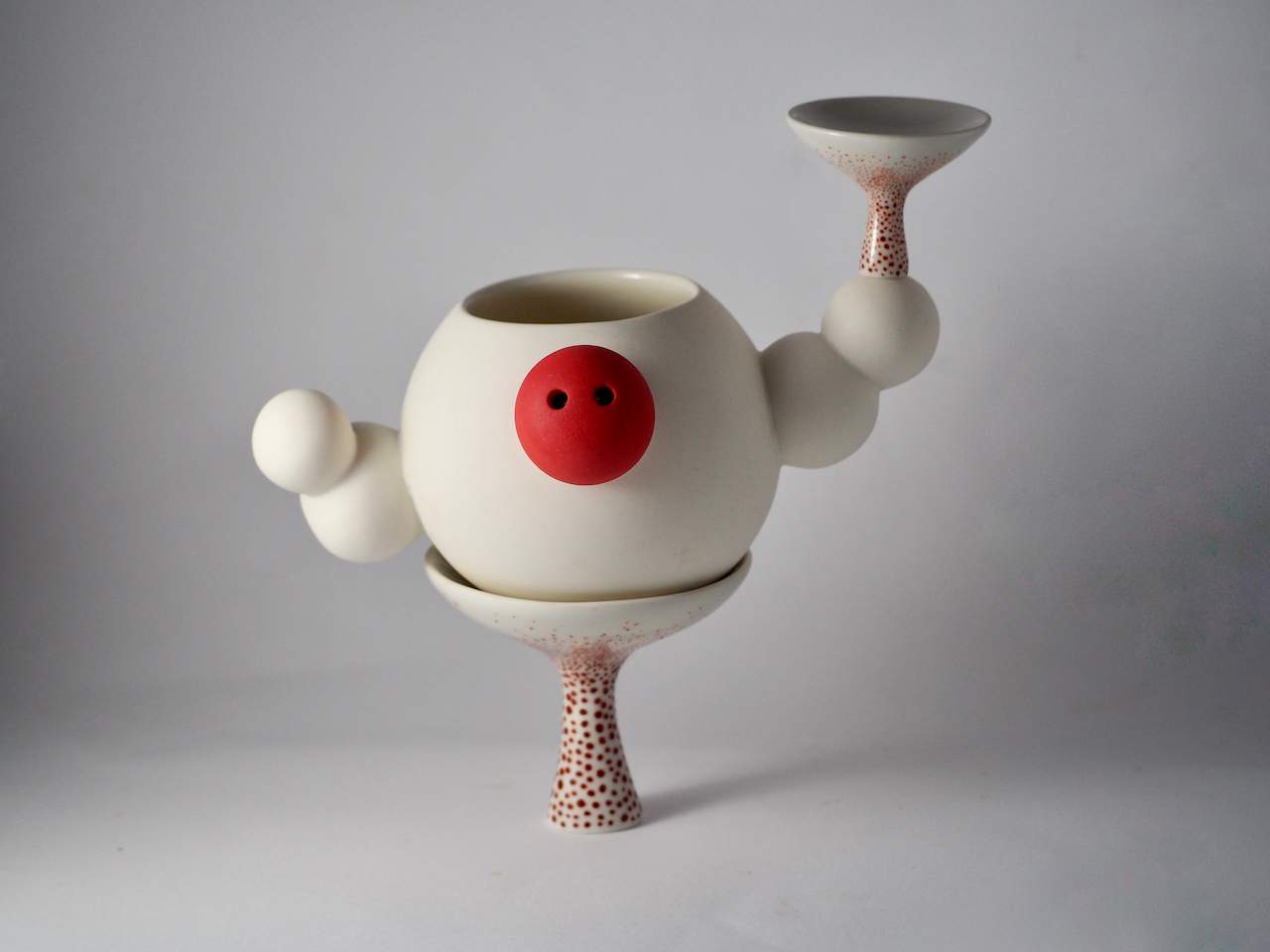
Kimie’s journey reflects the transformative power of following one’s passion. After establishing a career in engineering, she chose to pursue her lifelong dream of becoming a ceramic artist. In 2012, her fascination with traditional Japanese ceramics brought her to Japan, where she immersed herself in the study of the craft. Since then, she has dedicated herself to refining her practice and developing a distinctive artistic voice.
Working primarily with clay, Kimie creates quiet, evocative pieces that balance technical precision with the wisdom gained through experimentation, perseverance, and failure. Although self-taught, she has embraced a nomadic life, traveling in search of cultural exchange and traditional craftsmanship, which remain at the heart of her practice.
Through ceramics, Kimie has come to better understand her own identity. As a Brazilian artist, she draws inspiration from the Anthropophagic Manifesto (1928) by Oswald de Andrade, a philosophy that encourages absorbing and transforming external influences rather than simply imitating them. Its iconic phrase, “Tupi or not Tupi: that is the question,” continues to resonate deeply with her work.
Engaging with Japanese ceramic traditions through the lens of her Brazilian heritage, Kimie seeks not to reproduce the past but to reinterpret it. Her work honors tradition while expressing a contemporary, cross-cultural identity shaped by curiosity, movement, and dialogue.
Inspired by Confucius’ reflection on the stages of life, she sees her artistic practice as a lifelong path of learning, discipline, and self-cultivation—one in which mastery is not a destination but an ongoing journey.
子曰わく、
吾十有五にして学に志し、
三十にして立ち、
四十にして惑わず、
五十にして天命を知り、
六十にして耳順い、
七十にして心の欲する所に従へども矩を踰えず (孔子)
Info

Kimie Ino
Activity
artist
Country, region
Brazil
Biography
Resumé・2025
Documents
Rheological Evaluation of Phosphatic Porcelain using Squeeze Flow techinique (2020)
(INO, K.)Estudo da reologia de uma massa de porcelana fosfática para uso na conformação em torno elétrico – 2017 EPUSP-PMT
NGO in official partnership with UNESCO